Agent Sandboxes Are Learning Their Cleanup Rules
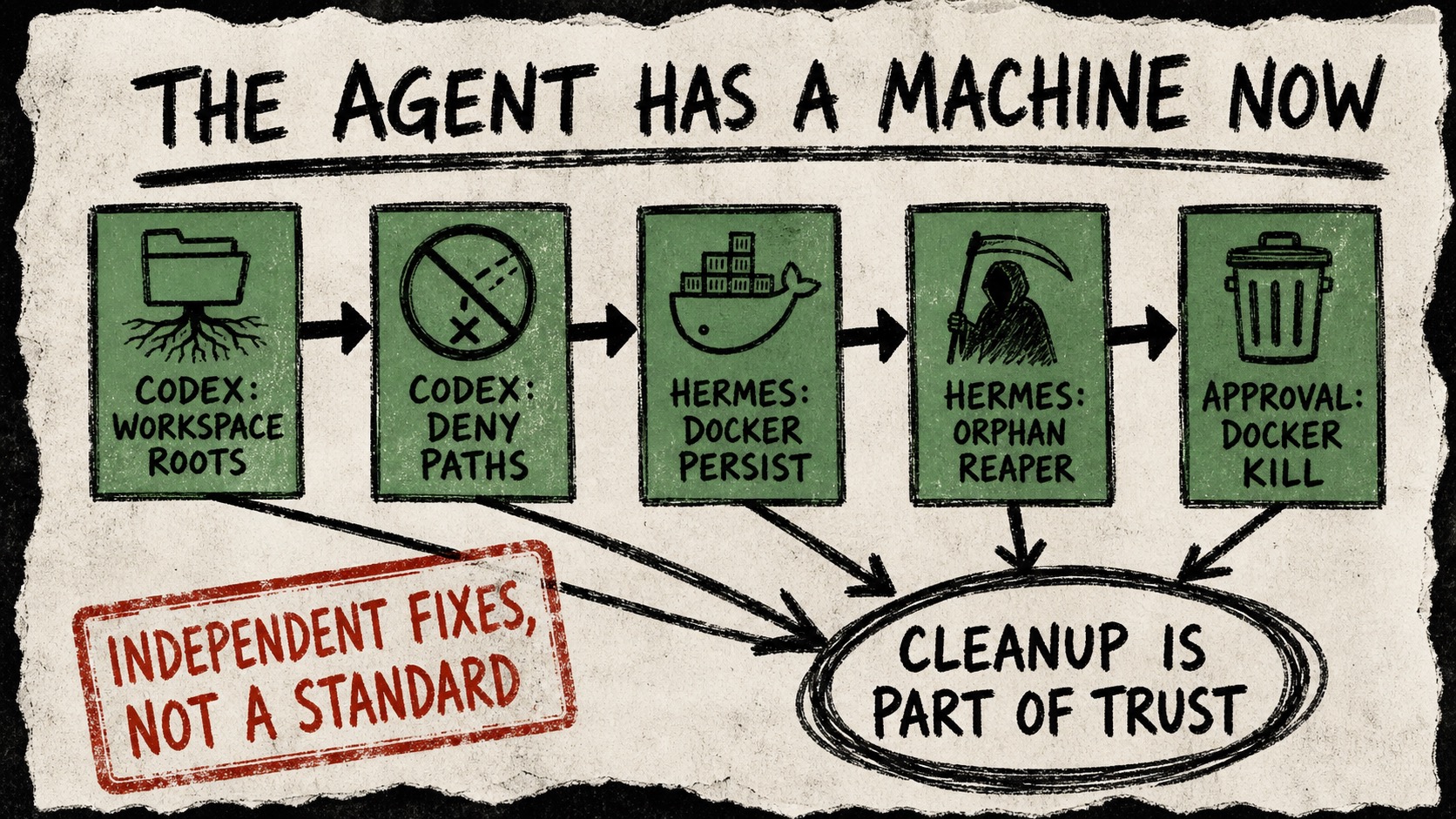
Fresh Codex and Hermes commits point to a practical agent shift: the local machine is becoming part of the runtime contract, with workspace roots, filesystem denies, Docker persistence, orphan cleanup, and lifecycle commands written down in code.
Edition File
All editions ›Recent Editions
Full history ›OpenAI Gives 20 Languages the Same Database Exam
MultiLangBench asks a model to build a database engine in a chosen language. The revealing part is the examiner: reference SQLite reads the file that implementation leaves behind.
Unsloth Can Reject a New Model to Keep Another Loaded
New Studio code gives chat, image and video models a choice: share GPU memory when possible, make room, or refuse a disruptive load. When media does displace chat, it can also save the primary GGUF model’s cached work.
Pi Can Park Agent Tasks Until the Host Wakes Them
Pi’s experimental durable harness now stores a sleeping task’s deadline and next step, letting a host alarm bring execution back later. The change separates continuing work from a continuously running process.
Goose Replaces V8 Without Giving Up Tool Batching
The agent’s development branch swaps PCTX’s Deno-based runtime for Boa. It keeps the ability to discover tools and compose their results, while removing generated TypeScript and a chain of build workarounds.
How AI Agents Work
The long-form map behind the daily paper: context, tools, loops, memory, delegation, safety, interface, and trust.