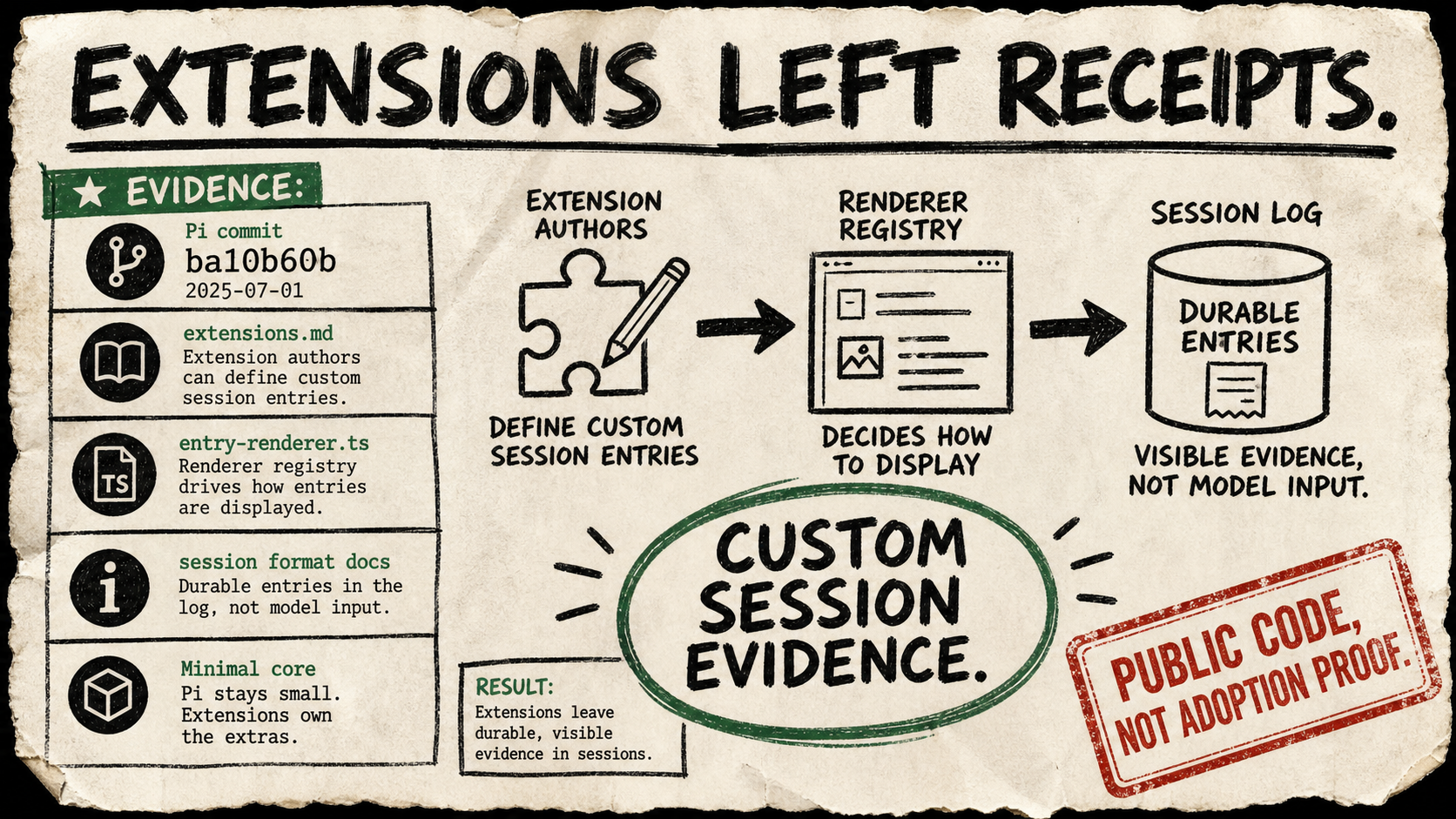
Mario Zechner added custom entry renderers to Pi's coding-agent package on July 1, changing the extension docs, session manager, interactive TUI, and a new entry-renderer.ts example.
Pi's docs already present it as a small agent harness that users reshape through extensions. This commit does not add a giant built-in workflow; it makes extension-authored session records visible without sending the custom display back to the model.
The Choice
The pressure is familiar for a minimal agent runtime: if extensions can store state, users also need to read that state later. Zechner's intervention adds pi.registerEntryRenderer(), exports the related types, and teaches the interactive mode how to render custom entries with Pi's TUI components.
The Public Work
Pi's docs and package evidence show the same maintainer choice from another angle: the project keeps the core small while exposing extension hooks for tools, commands, events, UI components, compaction, and now durable session rendering.
What To Watch
For tool builders, the next signal is whether Pi extension authors use custom entries for real audit cards, todo state, handoff notes, or integration receipts. The evidence is narrow: public code, docs, package metadata, and visible maintainer activity, not private governance or adoption.