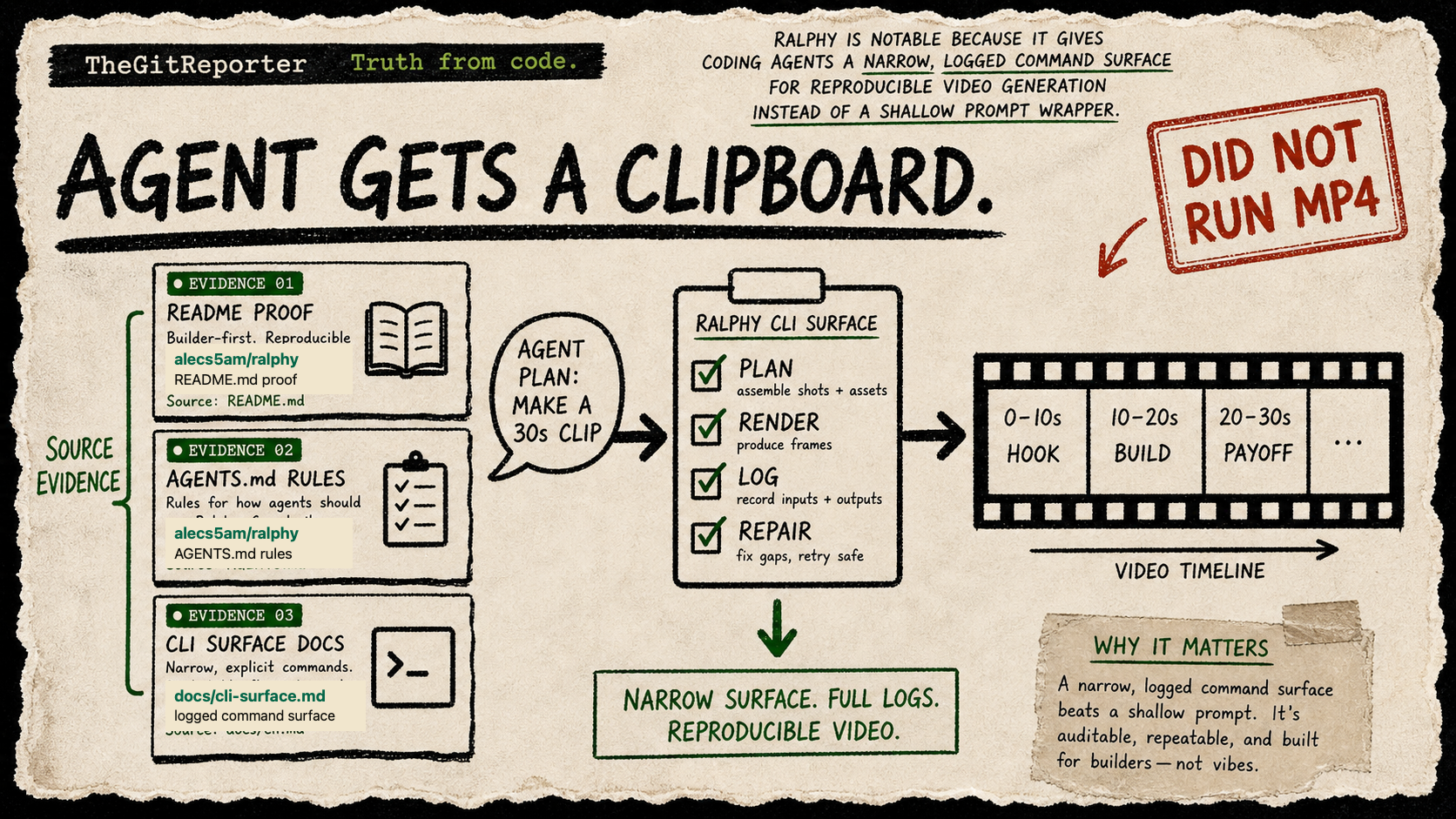
The public proof is in the README: Ralphy says the user stays in Claude Code, Cursor, or Codex while the agent drives the CLI, and the project footer says it was built with Claude Code.
How they built it
The engineering depth is the boundary discipline. Ralphy makes `ralphy <verb>` the entry point for projects, model calls, assets, renders, logs, and postmortems, then routes agent behavior through a large `AGENTS.md` playbook instead of leaving every run as a one-off script.
The repo evidence
The repo exposes more than a demo: a TypeScript CLI with commands for generation, rendering, doctor checks, project memory, templates, assets, queues, evaluations, and release paths; an agent-skill tree; documented CLI surface; and tests/workflows for install, release, and verification.
The building skill
The transferable skill is to make the agent's operating surface boring on purpose. Ralphy separates chat intent from runtime verbs, then requires logs, quality gates, and project state so a media agent can be repeated and debugged after the exciting model call is over.
What to inspect next
The caveat is cost and provider dependence: the README names paid APIs and estimates video cost, so builders should inspect failure handling before copying the model. A constructive question for Alec is which `ralphy` verb best proved the "no ad hoc provider calls" rule under real user pressure.