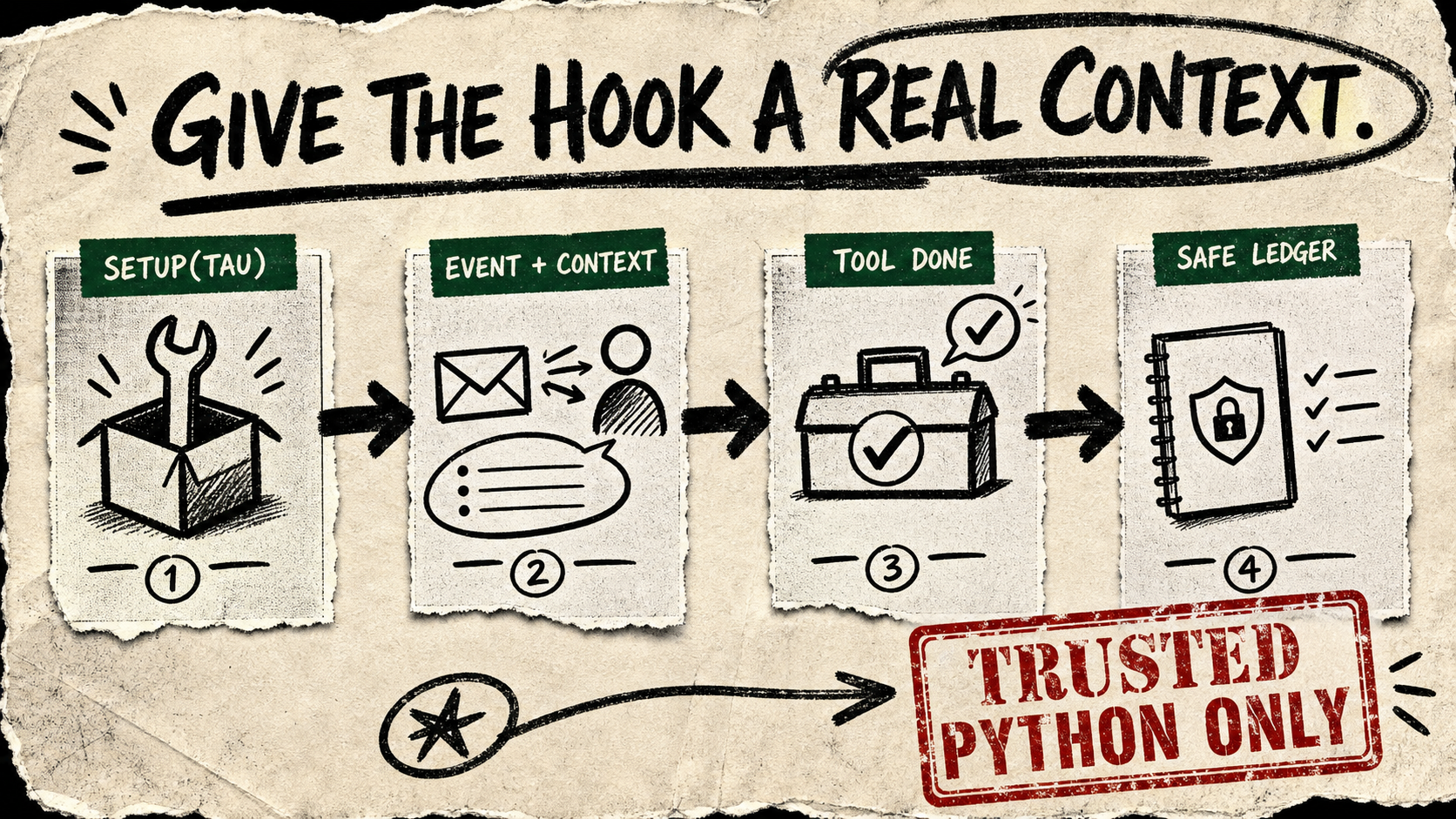
API discovery: Tau's extension guide documents a Python surface for custom tools, slash commands, event handlers, dialogs and message rendering. An extension starts in setup(tau); handlers receive a fresh (event, context) pair. The matching API definition names the tool and session events that make a small operational record possible.
Try it
Build a deploy ledger that listens for a tool's terminal result and appends a short, public-safe record to the session: tool name, whether it completed, and the next human check. The practical gain is not automation theatre; it is giving the next person a visible trail when a deployment, migration or review tool succeeded halfway or failed after producing output.
Copy-paste agent instruction
Create a Tau Python extension named deploy_ledger.py. In setup(tau), register no shell-executing tools. Instead, listen for the documented tool_execution_end event with a handler(event, context). When a tool completes, append a compact public-safe session record containing the tool name, success or error state, and one required human follow-up. Use only the current Tau extension guide and types; keep credentials, command output, file paths, and deployment secrets out of the record. Add a small test or dry-run fixture that proves the handler tolerates a failed tool result.Test caveat
This is a local coding-harness interface, not a hosted API. Tau's guide says project extensions execute arbitrary Python and are disabled by default unless a project is trusted. The instruction has not been independently executed by this publication, and the protocol rewrite is fresh; pin the Tau version, test in a disposable project, and inspect the exact event types before letting an extension record real deployment or review activity.