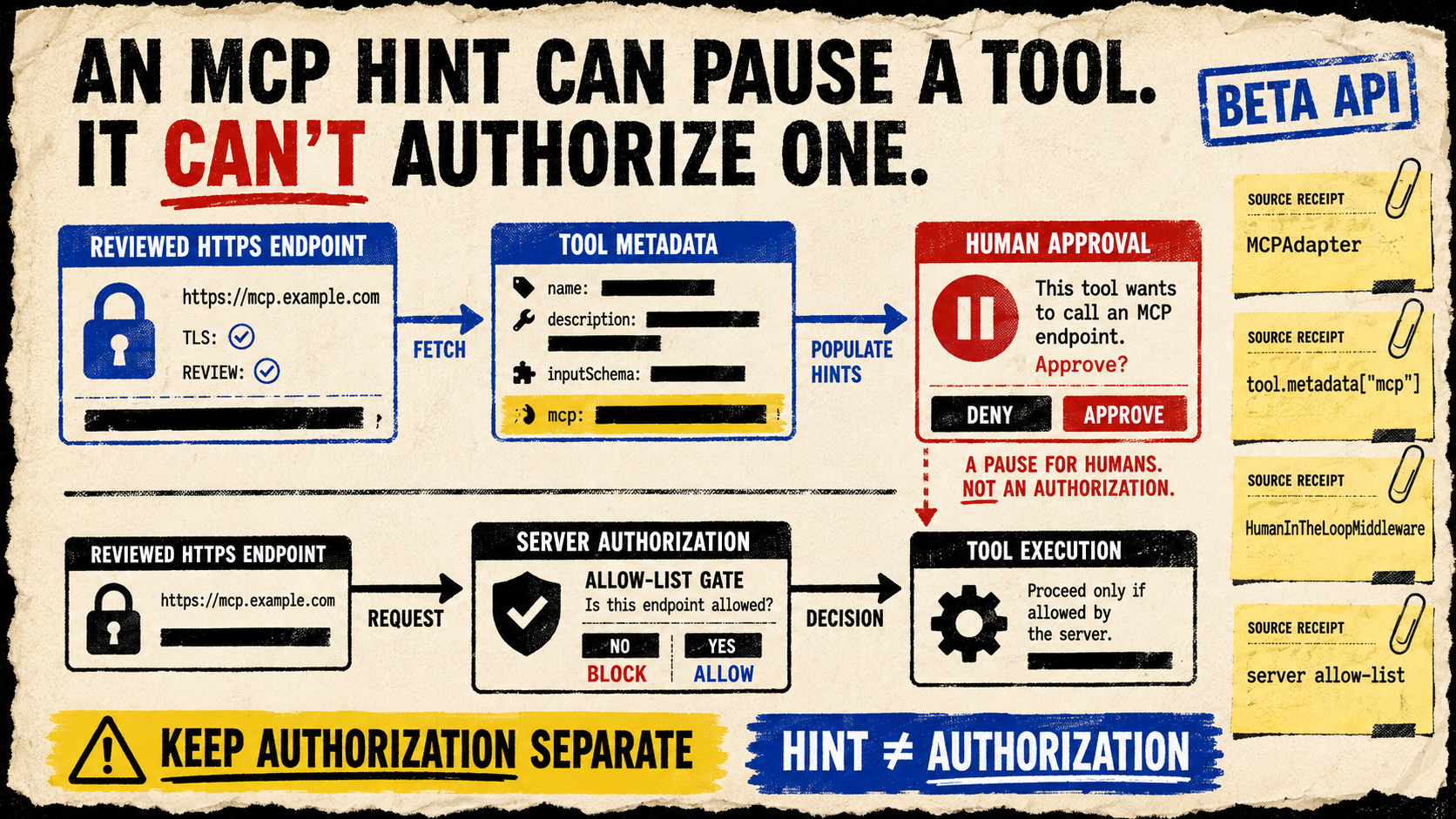
API discovery: LangChain's new langchain.mcp source adds MCPAdapter, a small bridge from a FastMCP target to tools that create_agent can use. The important detail is not simply discovery. The adapter keeps a tool's annotations and the connected server's identity under tool.metadata["mcp"], so a client can make a visible policy choice based on provenance rather than a hard-coded list of tool names.
Try it
Imagine a reviewed document-operations server with a harmless reader and a destructive archive tool. The public LangChain example scans every discovered tool for the MCP destructive_hint, builds a HumanInTheLoopMiddleware approval map only for those tools, and resumes the run after a person decides. That makes an evolving server catalog easier to supervise: a newly exposed destructive tool can be paused without first editing a client-side name list.
Copy-paste agent instruction
Connect only to the reviewed HTTPS MCP endpoint I provide. Use MCPAdapter to discover its tools. For every tool whose metadata contains mcp.tool.annotations.destructive_hint, require a human approval step that shows the server name, tool name, and arguments. Treat the hint as advisory metadata: keep the server-side allow-list and authorization policy in force, and do not turn model-provided strings into local Path or MCPConfig targets.Test caveat
langchain.mcp is explicitly beta, and the adapter source requires the relevant FastMCP installation. A real use needs a reviewed endpoint, credentials, a model, and durable checkpointing for paused runs. The upstream example says it was run with a model, but this report did not run one; more importantly, an MCP annotation can help a client decide to ask, not replace a server's authorization policy or safely execute the call.