Inside TypeSafe’s Model Comparison: What the Adapter Makes You Pay For
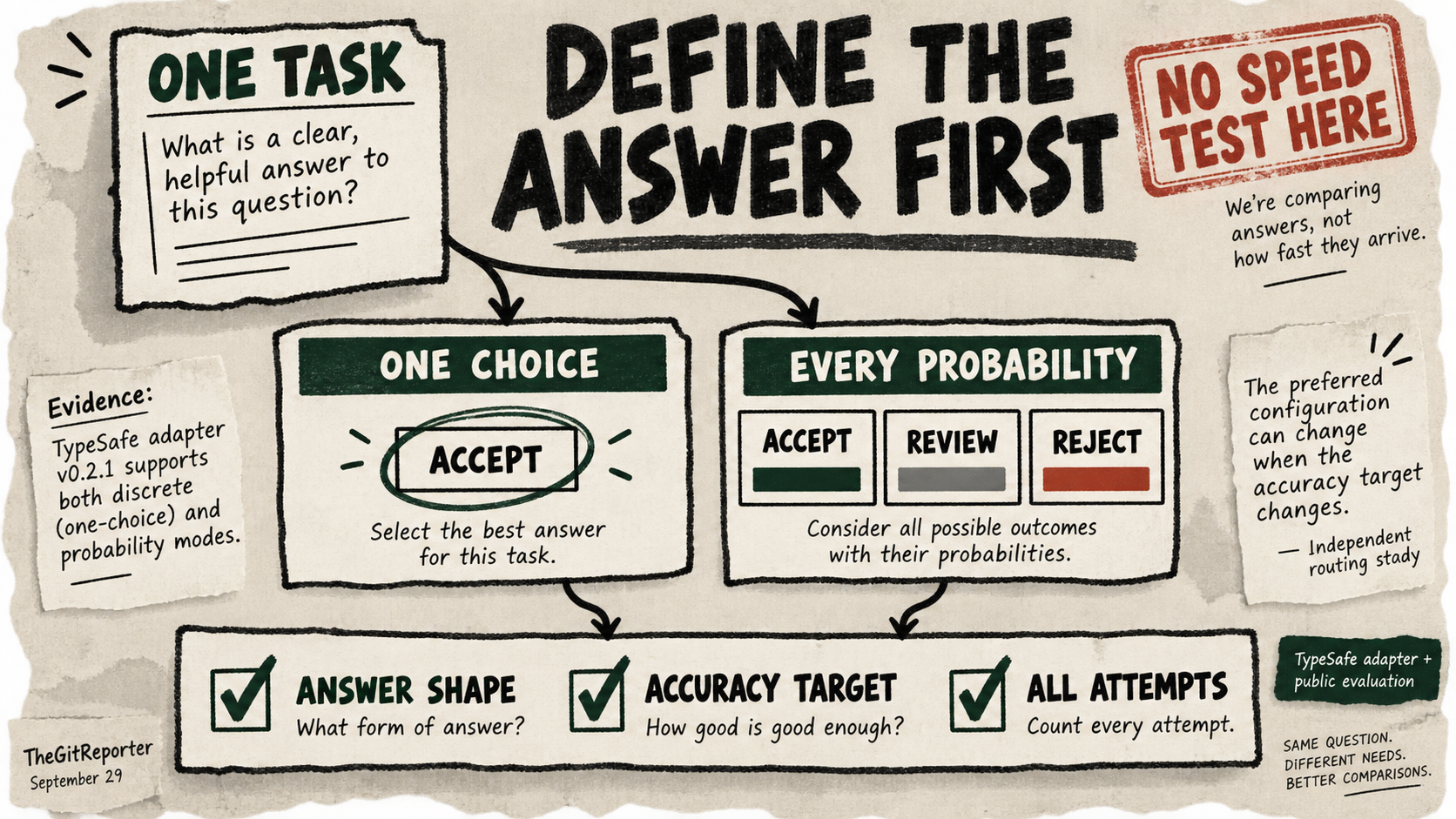
A probability-bearing answer buys more than a label. Local decision models and a public routing experiment now expose the next choice: how much accuracy must the cheaper route preserve?
Edition File
All editions ›Recent Editions
Full history ›Who Supplies the Agent? OpenAI Hosts It, Pydantic Assembles It
Pydantic’s weekend changes tie a framework, a coding harness and a terminal client to one release process. Set beside OpenAI’s managed Agents API, they reveal a choice that model rankings miss: which parts of the agent your team still has to run.
You Sent the Correction. Has the Agent Read It?
QM now places a mid-run correction where the agent runtime receives it. That small change separates a delivery problem from an agent that had the information and still went wrong.
Unsloth’s Sandbox Is Back. A Working Tool Still Does Not Prove Isolation.
The replacement for Studio’s reverted sandbox has landed, followed by a Windows Preview. Its promise is conditional: establish what boundary actually ran, and distinguish an unavailable host from a launch that must be refused.
Goose Gets Small Enough to Bundle. Its Old Recipes May Not Fit.
A lean agent build answers Buzz’s packaging problem. The review draws a harder line around which existing configurations it will carry.
How AI Agents Work
The long-form map behind the daily paper: context, tools, loops, memory, delegation, safety, interface, and trust.