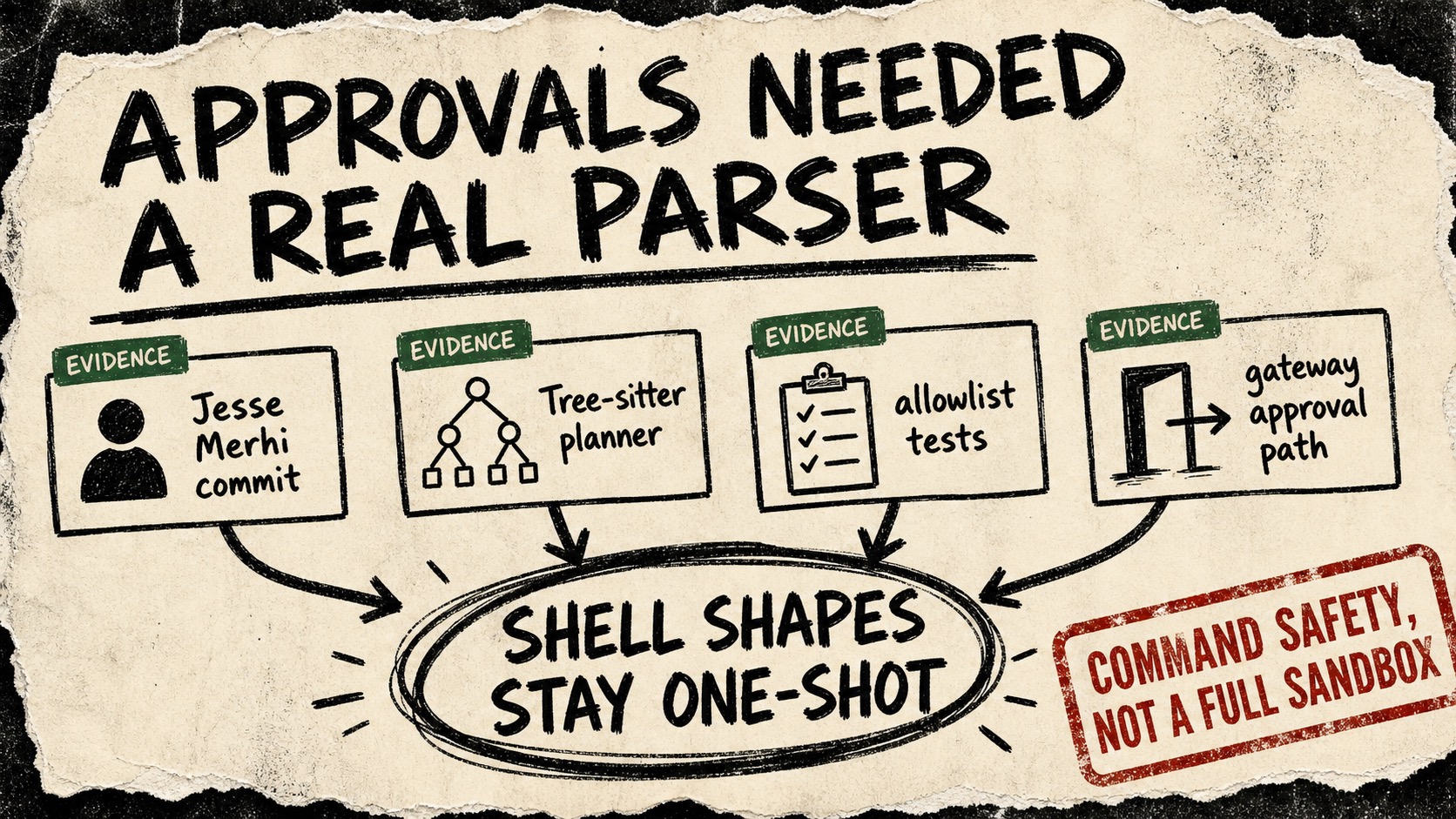
Jesse Merhi's June 18 commit c9707ab635 is a maintenance story about trust UX: when an agent asks to run a command, the approval prompt has to understand the shell shape well enough to avoid turning a one-time decision into a durable permission.
The Public Trail
The patch introduces an authorization plan, command extraction helpers, rendering tests, allowlist matching tests, host approval tests, and gateway approval updates. The commit message says unpersistable shell shapes stay one-shot and exposes typed unavailableDecisions for prompts.
That is contributor work at the boundary between implementation and user judgment. The visible code path now has to parse, explain, render, store, and forward approval decisions without making shell syntax look safer than it is.
Why This Contribution Matters
OpenClaw's broader June 19 scan had provider catalogs, per-agent memory storage, and plugin changes, but Merhi's command-approval patch carries the clearest people-centered arc: a maintainer took a brittle safety surface and rebuilt the machinery that makes it legible to users.
The contribution also gives future reviewers something concrete to challenge. The tests name allowlist persistence, command rendering, host approval paths, and shell analysis rather than relying on a vague "permission fix" label.
The Conversation To Open
The constructive follow-up is whether OpenClaw can show the same planner behavior across the nastiest real command shapes: nested shells, platform differences, generated scripts, and plugin-spawned commands that arrive far from the original prompt.