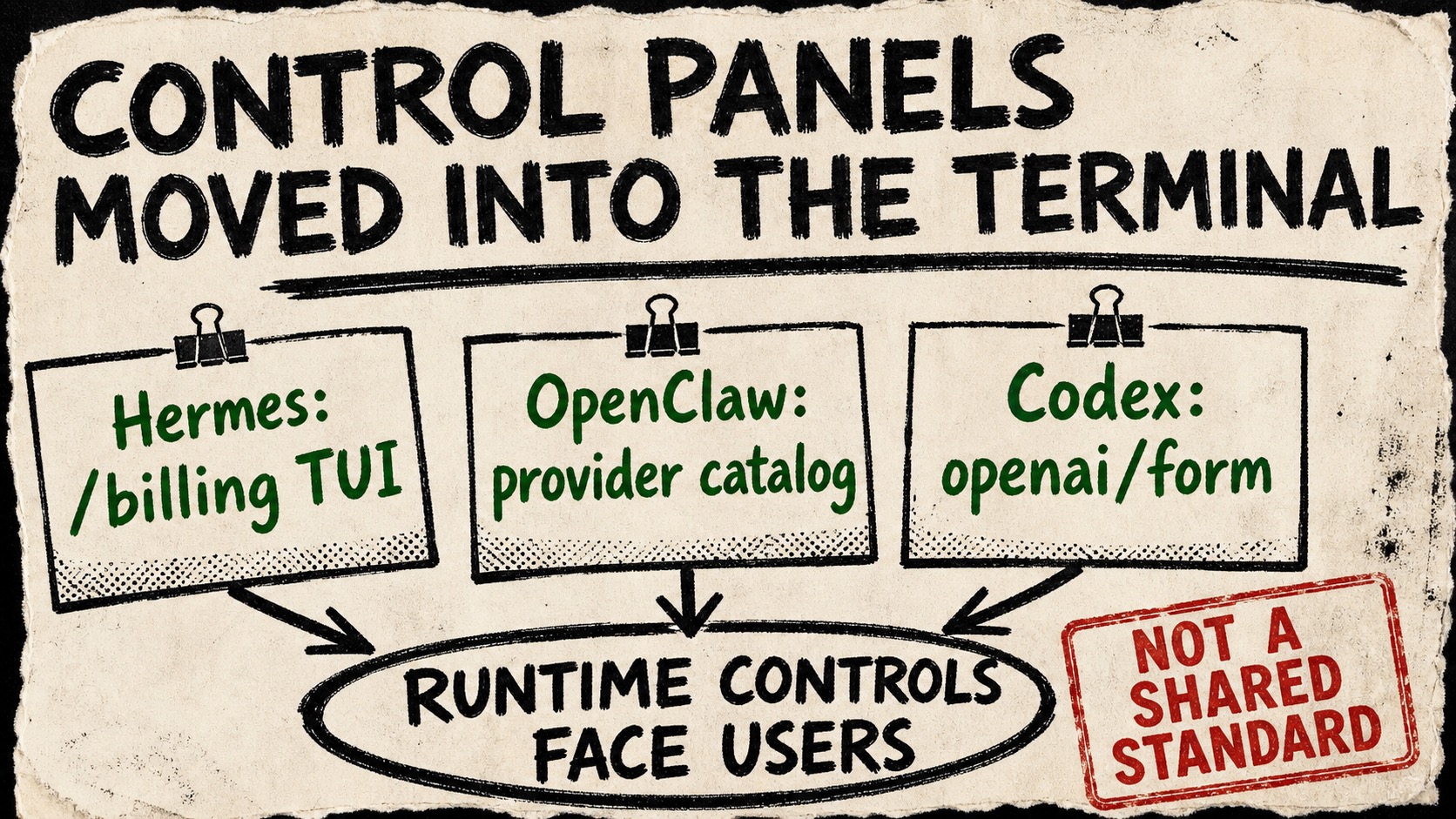
Agent Control Panels Move Into The Terminal
Hermes Agent, OpenClaw, and Codex all moved user-facing control surfaces closer to the agent runtime, from billing and provider setup to structured MCP prompts.
More From This Edition
All editions ›Recent Editions
Full history ›The Allow Button Was Waiting for a Socket
OpenWork reproduced a ten-second approval timeout before the user’s decision reached the engine. The repair gives that decision a separate route through a busy desktop app.
The Cookie Jar Between Two Agent Sessions
Microsoft’s Agent Framework is changing what its Python HTTP clients remember. A new conversation can still inherit an old login when both use the same cookie jar.
The Fine Print Behind Kilo’s Swarm Default
Kilo’s main branch now enables a shared agent board by default. Its messages can carry findings across a team—but a successful post cannot summon a worker, prove it listened, or stop it.
A Child Agent Can't Promise Its Watcher to the Parent
Hermes now makes a child wait, kill, or formally hand over background work before it returns—ending one treacherous kind of progress report.
How AI Agents Work
The long-form map behind the daily paper: context, tools, loops, memory, delegation, safety, interface, and trust.