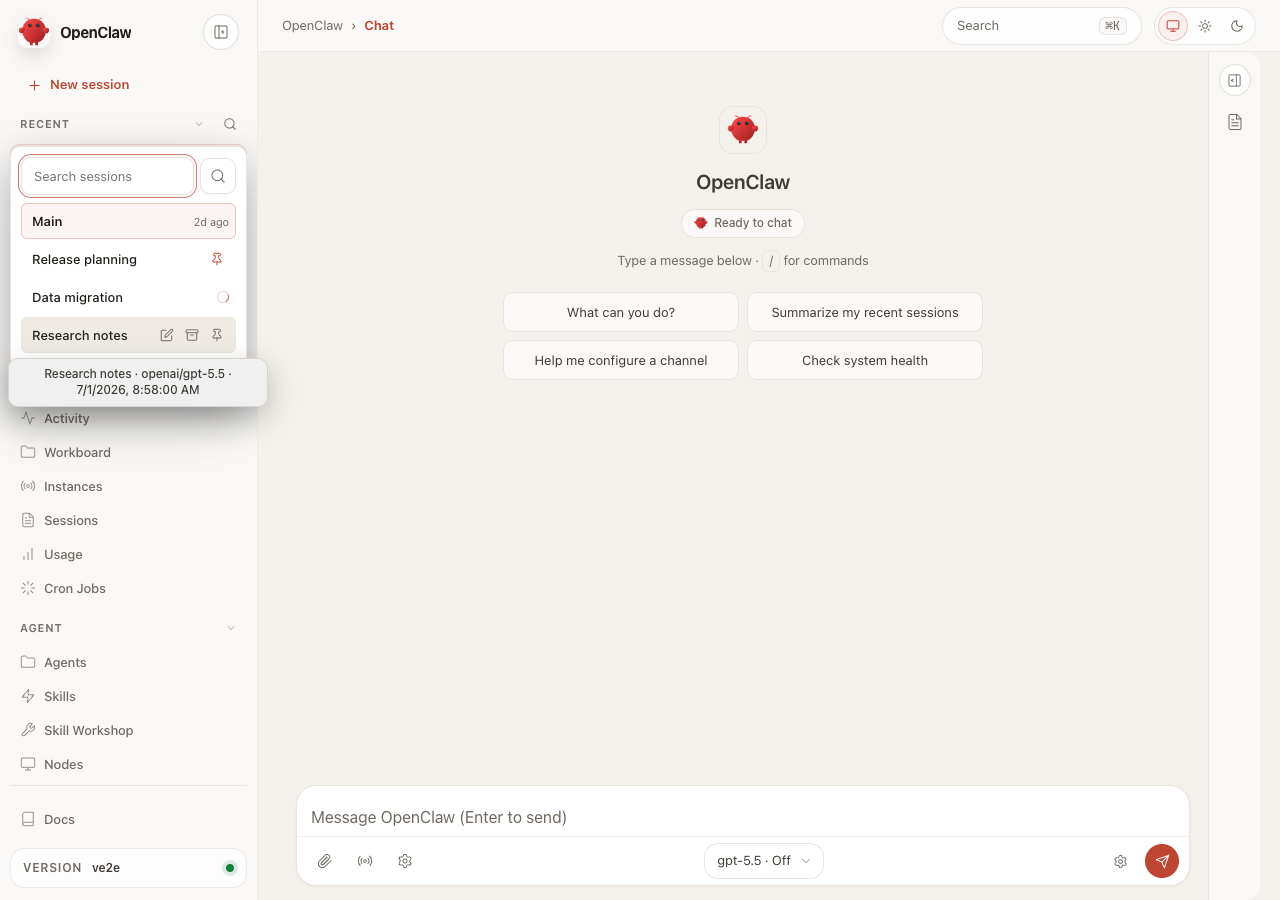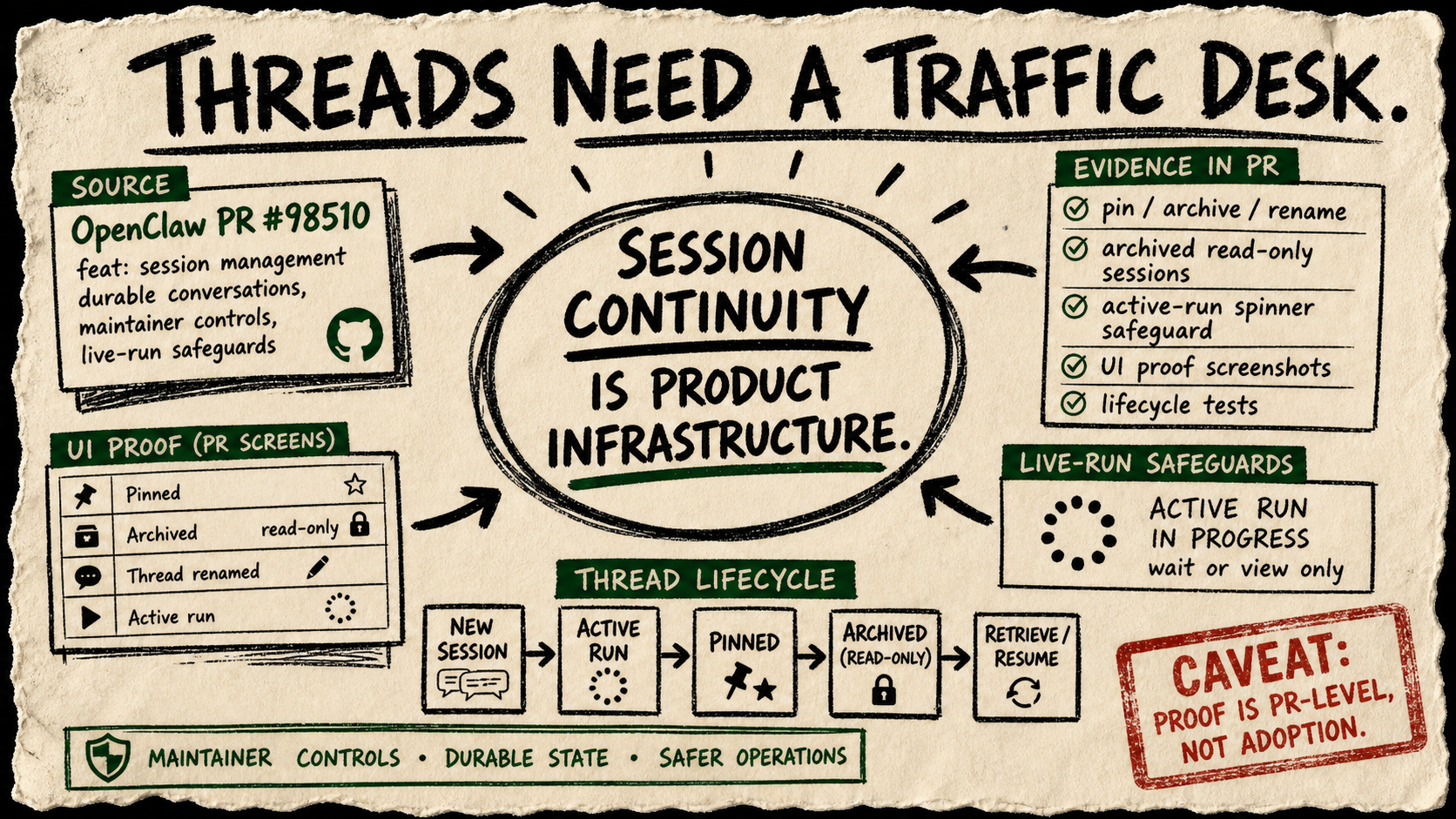
OpenClaw maintainer Peter Steinberger merged PR #98510 on July 4 after a redesign that moved session controls out of always-visible row buttons and into hover, focus, pinned-badge, and active-run states.
This is the Daily Story because the public PR body shows a visible maintainer pressure: durable agent conversations are useful only when users can rename, pin, archive, restore, and inspect them without losing the thread or accidentally mutating a live run.
The Pressure
The PR says OpenClaw already treated sessions as durable conversation threads, but the controls were fragmented. Frequent sessions disappeared into recency ordering, stale sessions stayed active unless deleted, and renaming did not line up cleanly with the chat surfaces.
The Intervention
The change puts pin, archive, restore, and rename on the existing session model. The public source says sessions.list separates active and archived sessions, sessions.patch owns mutations, live sessions.changed events keep subscribed UI coherent, archived chats become read-only, and active runs cannot be archived.
The Public Work
Steinberger's GitHub profile and the PR labels matter only because they clarify the public role: this is maintainer-authored, proof-heavy product infrastructure work, not an outside patch landing on an unknown state model. The proof list includes UI screenshots, Chromium flow coverage, 440 focused UI tests, gateway lifecycle suites, type checks, a production build, and a structured autoreview trail.
What To Watch
The evidence does not prove that users will manage long-lived agent histories well, or that every client gets the same session semantics. Operators and maintainers should watch whether the session lifecycle stays consistent across native apps, web UI, Codex integration, and archived-thread restore paths.