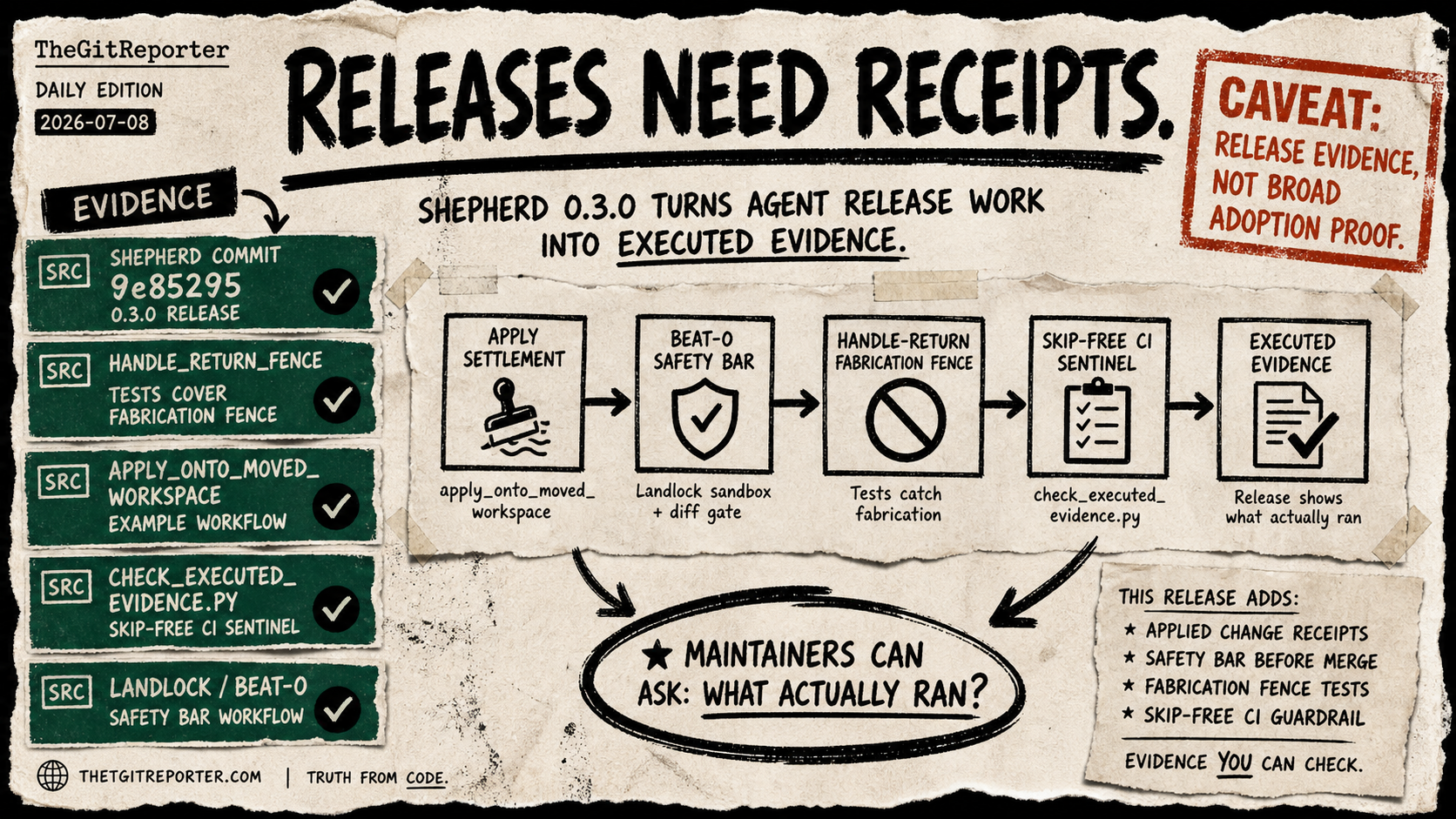
Shepherd's July 7 commit 9e85295 put a lot under one release label: apply settlement for moved workspaces, a Beat-0 safety bar, handle-return refusal tests, registration ergonomics, and a dry-run evidence line.
Why The Project Context Matters
The related public work earns its place because Shepherd already presents itself as a workspace-control and agent-runtime project; the README, roadmap, and release commit all make safety evidence the reason the change is worth believing.
The Pressure
The visible pressure is release trust. The commit says Lane C ran 10/10, Beat-0 safety ran 19/19, and a new sentinel script checks that required tests were present, passed, and not hidden by skipped jail legs.
The Intervention
The release adds an apply path that can three-way-merge a candidate output onto a workspace that moved, but only when the deltas are path-disjoint. It also removes the seal feature flag and adds a guard test so seal mode is unconditional.
What Changed
The strongest human arc is maintainer discipline, not biography: Chong's public commit and Claude Fable 5 co-authorship turn safety claims into code paths, examples, and tests that future contributors can inspect before trusting a release.
What To Watch
Builders should watch whether Shepherd keeps naming the exact test evidence for each capability. The fairness limit is that one release commit proves a serious release bar, not broad user adoption or independent security review.