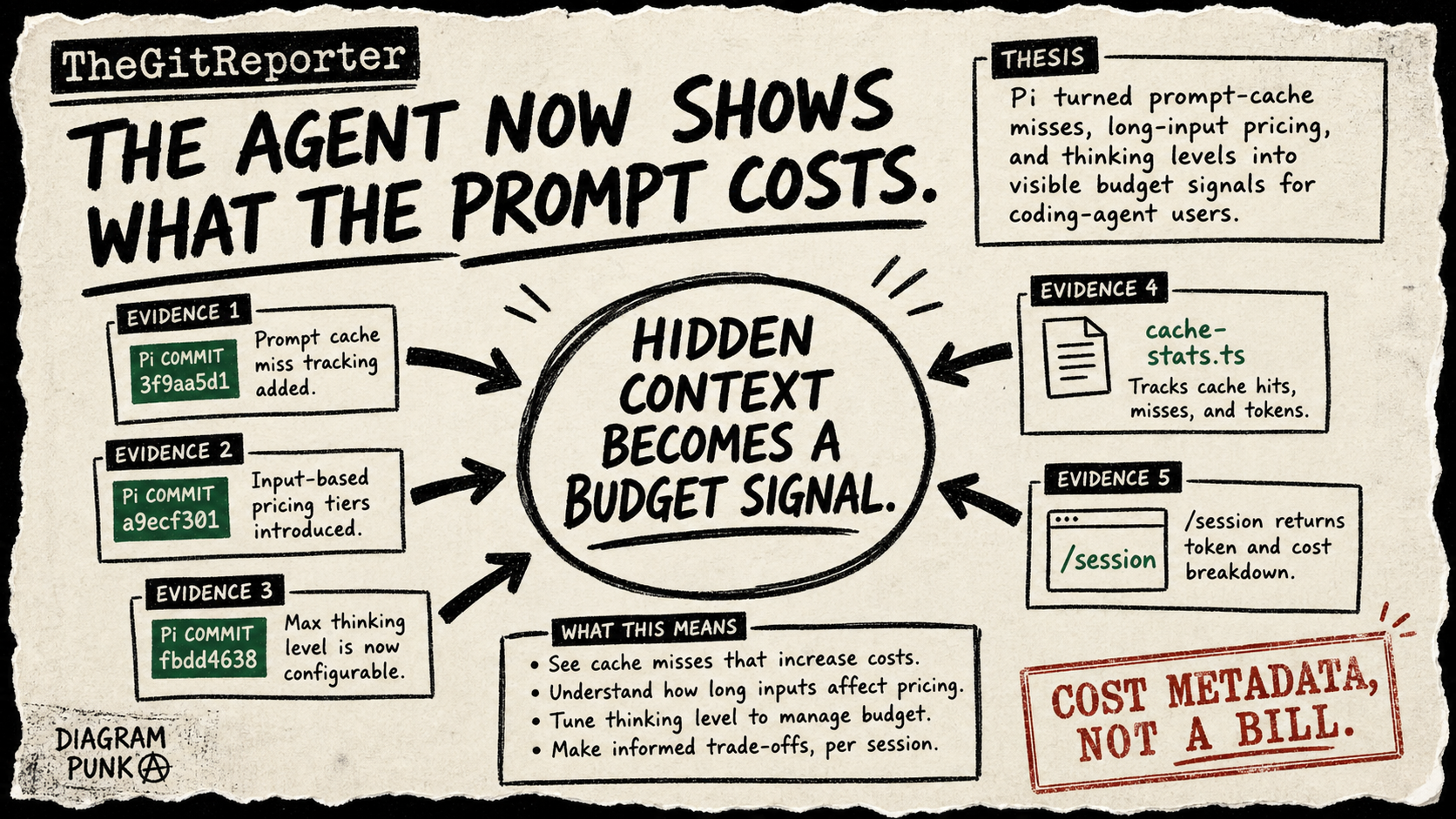
Pi merged 3f9aa5d1 on July 9 to detect prompt-cache misses and show session-level cache, token, and rebilled-cost stats. Later commits added input-based pricing tiers and a maximum thinking level.
The related public work earns its place because Pi's README positions the project as a minimal terminal coding harness that adapts through models, extensions, skills, and sessions; these commits make the cost of that flexibility visible to the user.
The pressure
A coding agent can feel cheap while it quietly re-sends a large prompt. Pi's new `cache-stats.ts` code compares a turn's cache reads against the previous prompt, ignores small noise, and flags significant misses caused by idle gaps or model switches.
The intervention
The `/session` view gained a token and cache breakdown, hit rate, per-model cost section, and cumulative cost rebilled because of cache misses. The pricing-tier commit then taught model metadata about request-wide long-input rates, while the thinking-level commit made `max` reasoning an explicit supported level where models expose it.
Why it matters
For builders, the change separates three decisions that often blur together: keep the session warm, switch models anyway, or deliberately buy more reasoning. The fairness limit is that the evidence shows metadata and UI accounting, not the user's actual bill. What to watch is whether Pi turns these warnings into settings, defaults, or release-note guidance.