QM is trying to turn the personal agent into company infrastructure
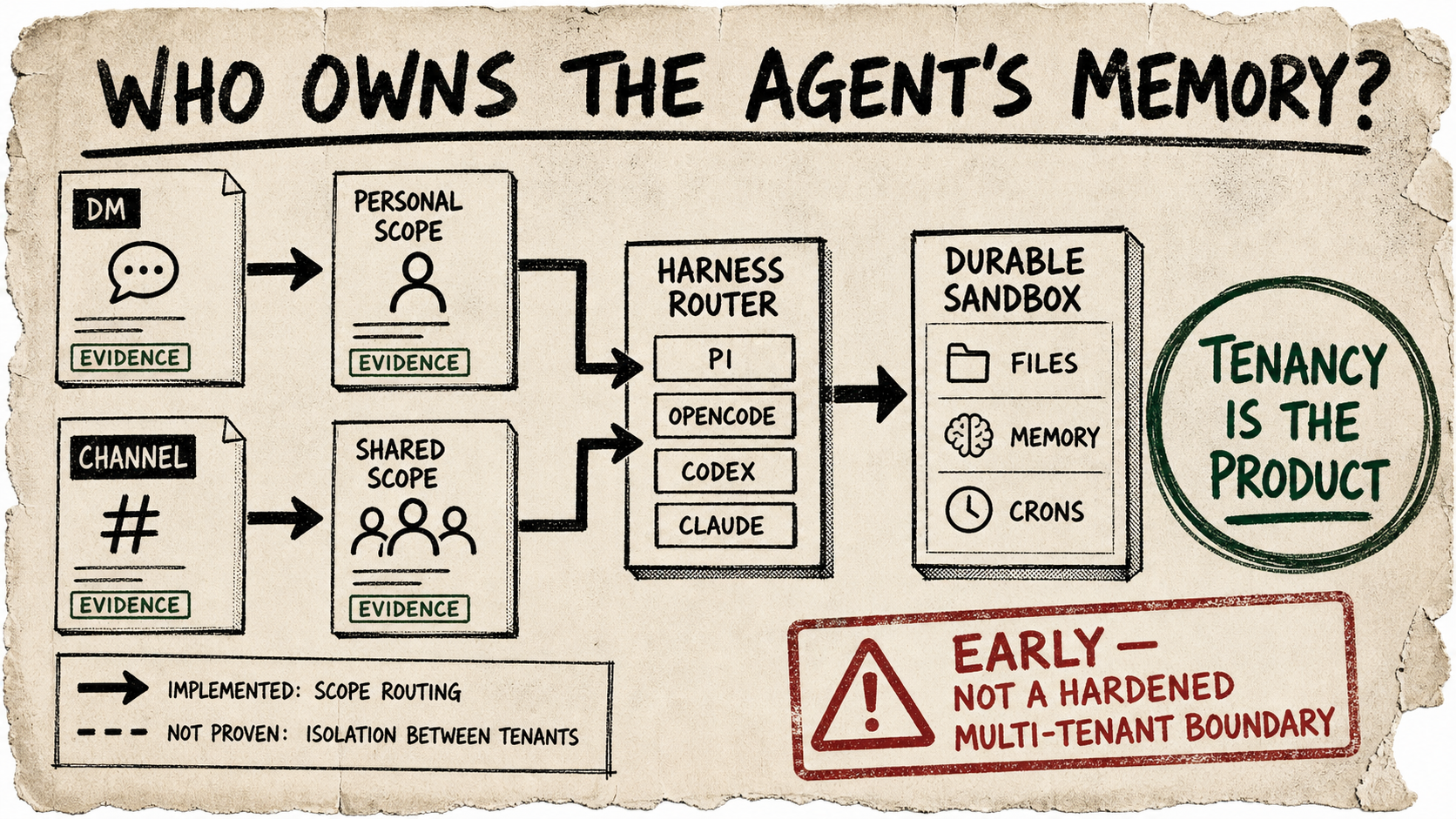
Y Combinator's new open-source harness does not win its case by running Codex or Claude in Slack. Its more consequential bet is that every person and room needs a clearly owned memory, workspace, permission set, schedule, and durable computer.
More From This Edition
All editions ›Recent Editions
Full history ›The Cookie Jar Between Two Agent Sessions
Microsoft’s Agent Framework is changing what its Python HTTP clients remember. A new conversation can still inherit an old login when both use the same cookie jar.
The Fine Print Behind Kilo’s Swarm Default
Kilo’s main branch now enables a shared agent board by default. Its messages can carry findings across a team—but a successful post cannot summon a worker, prove it listened, or stop it.
A Child Agent Can't Promise Its Watcher to the Parent
Hermes now makes a child wait, kill, or formally hand over background work before it returns—ending one treacherous kind of progress report.
A Computer-Using Agent Needs a Room, Not a House Key
OpenWork’s merged macOS 14+ preview gives a desktop-driving agent one person-approved window and a short-lived native session—a meaningful boundary, but not an operating-system sandbox.
How AI Agents Work
The long-form map behind the daily paper: context, tools, loops, memory, delegation, safety, interface, and trust.